



Giving a child part of the family farm or transferring a parcel to a relative can seem straightforward. Yet dividing Alabama land may involve surveys, subdivision approvals, deed recording, taxes, and future plans for the property. A new law effective October 1, 2026, makes the timing of certain follow-up transfers particularly important.
Alabama Act 2026-49 amends the county subdivision statute to address a transfer from an immediate family member to someone outside the family within 24 months of an earlier exempt family transfer. The change does not prohibit every resale during that period. Instead, it can bring applicable county subdivision requirements into play, with an important exception for counties where local law requires land division by a recorded plat.
Families dividing rural land should distinguish deed transfers from subdivision approvals.
What Did Alabama Change in 2026?
The Legislature enacted House Bill 140 as Act 2026-49. Its amendment to Alabama Code Section 11-24-2 became effective on October 1, 2026. The official enrolled legislation preserves an exception for transfers from an owner to an immediate family member while adding a rule concerning subsequent transfers to nonfamily members.
Under the amendment, when a qualifying interfamily transfer was exempt from the county subdivision provisions, a direct sale, deed, or transfer to a nonfamily member within 24 months can subject the land’s use to applicable county subdivision regulations. The statutory language also recognizes an exception for counties where local law requires division by recorded plat.
The rule concerns subdivision regulation, not a new gift tax or automatic deed cancellation.
How Does the Family Transfer Exception Work?
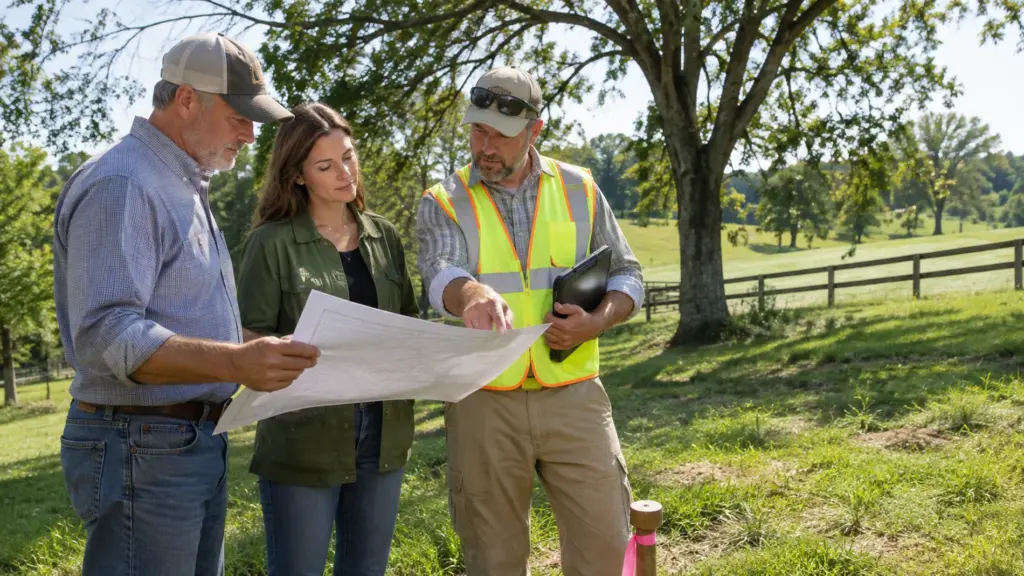
Section 11-24-2 has long excluded an owner’s sale, deed, or transfer to an immediate family member from specified county subdivision procedures. A parent transferring a portion of a rural tract to a child is a common example of the kind of transaction families may be considering.
Qualification depends on the relevant family relationship and transaction; not every relative or family-owned entity necessarily qualifies.
The change addresses land initially transferred under the family exception and soon afterward conveyed to an unrelated buyer. That second transaction can trigger subdivision requirements.
What Does the 24-Month Rule Actually Mean?
Consider an illustrative scenario. An Alabama landowner divides a larger rural tract and transfers one parcel to an immediate family member under the statutory exception. Ten months later, the recipient wants to sell that parcel to an unrelated purchaser.
The second transfer may require county subdivision compliance, depending on the land’s location, local rules, and whether it qualifies as a subdivision.
The 24-month period is not a statewide prohibition on selling or conveying land. Nor does waiting 24 months automatically make every later subdivision unregulated. The statute separately addresses nonfamily transfers of property meeting the subdivision definition. Families should evaluate the entire transaction rather than treating the date alone as a safe harbor.
What Counts as a Subdivision in Alabama?
Alabama Code Section 11-24-1 generally describes a subdivision as developing and dividing a tract into two or more lots or sites for purposes involving sale, lease, or building development. The definition also references roads, drainage, structures, utilities, and similar development work.
It includes an exclusion for construction or development of roads or buildings on private property used for agricultural purposes. But agricultural land is not automatically exempt from every subdivision rule when it is divided for later residential or commercial development.
Transferring an existing lot may differ legally from creating new building lots with roads and utilities.
Why the Recorded-Plat Exception Matters
The new law specifically recognizes counties where local law requires land divisions to be made by recorded plat. In those counties, the new 24-month clause contains an exception that owners must read alongside the applicable local rules.
That does not mean no plat is needed. Quite the opposite: a separate local-law recorded-plat requirement may still govern the transaction. County offices can explain local rules.
Before transferring or listing land, ask the county engineer, planning office, probate recording office, or an Alabama real estate attorney which plat approval rules apply. Rules vary by county.
County and Municipal Planning Rules Are Not Identical
County subdivision authority under Chapter 24 must also be distinguished from municipal subdivision authority. Land outside city limits can sometimes fall within a municipality’s planning jurisdiction.
Alabama Code Section 11-52-30 contains a separate framework for municipal planning jurisdictions, including a family-transfer provision and a 24-month rule in certain circumstances.
Because jurisdiction may depend on the property’s location and existing county-municipal arrangements, owners should confirm which public body regulates the proposed division before paying for plans or offering a lot for sale.
What May Be Required Before Selling a Divided Parcel?
When county subdivision rules apply, Section 11-24-2 addresses plat submission, review by the county engineer or designee, county commission approval, and development permitting. Depending on the proposal, plans may need to address roads, access, drainage, and public utilities.
The enrolled statute also refers to notice for adjoining owners and affected utilities during review. After requirements are met, the final plat may need the county engineer’s signature before being filed with the probate judge.
Noncompliance can be costly. Alabama Code Section 11-24-3 establishes penalties and enforcement tools for violations of the county subdivision chapter. An owner should not begin development or record subdivision-related transfer papers on the assumption that later approval will be automatic.
Deeds and Plats Serve Different Purposes
A deed transfers a legal interest in real estate, while a survey or subdivision plat describes land boundaries and proposed divisions. One document does not necessarily substitute for the other.
Alabama’s recording statute, Section 35-4-50, directs that conveyances required to be recorded must be recorded in the probate judge’s office. Before recording, owners should check whether the planned transaction also requires subdivision approval or a recorded plat.
Careful deed preparation also helps reduce disputes over easements, access rights, shared driveways, reserved mineral interests, and the exact acreage conveyed. Related title-security concerns are discussed in Anderson Law Group’s guide to the Alabama Property Protection Act of 2026.
Do Family Land Gifts Have Tax Consequences?
A family-transfer exception under subdivision law is not a tax exemption. A below-market transfer may raise federal gift-tax reporting questions, and owners should consider their individual circumstances before signing a deed.
The IRS gift-tax guidance explains that making a gift can carry reporting requirements even when no immediate gift tax is owed. Families should also ask about income-tax basis and potential future gains if the recipient later sells the property.
For qualifying Alabama agricultural and timberland, property-tax valuation deserves separate attention. The Alabama Department of Revenue’s current-use guidance states that a new owner must apply for current-use treatment after a sale or other disposition if that valuation is to continue.

What About Land Passing Through an Estate?
An inheritance after death is not necessarily the same transaction as an owner making a lifetime gift or deed. The family’s will, trust, current title, and probate status can affect who may transfer land and how it must be documented.
Anderson Law Group’s discussion of Alabama probate-avoidance options explains why property titles and trust funding matter. Its article on transfer-on-death deeds in Alabama also explains that the state does not currently authorize TOD deeds for real estate.
A planned division among heirs should address existing mortgages, undivided interests, access, and whether the proposed parcels can lawfully be transferred or developed.
Questions to Ask Before a Family Land Transfer
- Is the recipient an immediate family member for purposes of the relevant exemption?
- Will the transfer create a subdivision under applicable law?
- Does county law require a recorded plat or development permit?
- Is the land within a municipal planning jurisdiction?
- Could a later nonfamily transfer occur within 24 months?
- Are there easements, liens, access restrictions, or title concerns?
- Could the gift or sale change tax assessments or reporting obligations?
Ask these questions before preparing a deed or marketing a parcel. Surveyors, county staff, tax advisers, and attorneys may need to coordinate.
Final Thoughts
Act 2026-49 gives Alabama families another reason to plan carefully before dividing land and transferring it through several owners. Effective October 1, 2026, the law addresses qualifying transfers to nonfamily members within 24 months of exempt family transfers, subject to the statute’s local recorded-plat exception and other applicable subdivision provisions.
The safest approach is to verify the deed, identify the correct planning authority, review local plat requirements, and consider tax and inheritance effects before proceeding. For other property-law developments, visit the Anderson Law Group real estate law articles.
This article provides general educational information, not individualized legal, surveying, or tax advice.