




Signing important documents from another location can be convenient, especially when a property owner travels, lives outside Alabama, or cannot easily visit an office. But remote notarization also creates opportunities for identity theft, coercion, and increasingly convincing digital impersonation. Alabama updated its notary rules in 2026 to address those risks.
Effective October 1, 2026, Act 2026-536 added requirements involving identity verification, voluntary participation, recording disclosures, secure video communication, and suspected artificially generated images. These changes are particularly important for real estate transactions, although the rules can affect other documents that qualify for remote notarization.
The Alabama remote notarization rules for 2026 are intended to make it harder for someone to impersonate a signer or pressure a vulnerable individual into executing a document. They do not mean that every document can be notarized remotely or that a recorded video call guarantees a valid transaction.
What Changed in Alabama’s Notary Law?
Act 2026-536 was enacted through Senate Bill 292, which also established the Alabama Property Protection Act of 2026. It amended Alabama Code Sections 36-20-73 and 36-20-73.1, addressing both traditional notarial duties and remote notarization.
The Alabama Secretary of State’s notary guidance confirms the October 1 effective date and explains the new safeguards. The National Notary Association’s legislative review also outlines the rules for assessing a signer’s understanding and refusing suspicious remote acts.
The statute draws an important distinction. A notary may decline certain traditional notarial acts when fraud, deception, coercion, or doubts about understanding are present. Under specified circumstances, a notary handling a remote electronic act must refuse to proceed.

How Does Remote Notarization Work in Alabama?
Alabama allows qualifying signers to appear before a notary through simultaneous, two-way audio-video communication rather than sharing the same room. The notary and signer must be able to see and hear each other as the act occurs. The process also includes identity checks, a recorded session, and required handling of the signed document.
Remote appearance is not simply emailing a scanned signature or joining an informal video call. The applicable statutory steps must be completed, and the document must be one that can lawfully use the chosen method. Different rules can apply to a deed, a financial instrument, or an estate-planning document.
Where Must the Notary and Signer Be Located?
Under Alabama Code Section 36-20-73.1, the notary performing the remote act must be physically located in Alabama. The 2026 amendment also requires the remotely located signer to be within the United States.
A property owner who is overseas should not assume an Alabama notary can complete a remote signing from another country. Likewise, the notary cannot rely on an Alabama commission while physically conducting the remote act from an outside location.
People planning a transaction should confirm both parties’ locations before scheduling, particularly when a closing, travel date, or filing deadline creates time pressure.
Identity Verification Is a Central Safeguard
Alabama’s remote-notarization framework requires the notary to verify who is signing. Existing statutory methods include personal knowledge or specified government-issued identification paired with an additional check against data sources.
The purpose is to reduce the risk that a stranger uses stolen personal information, a falsified driver’s license, or another person’s property records to pose as an authorized signer. A photograph of identification alone should not be treated as proof that an entire transaction is legitimate.
For perspective, the FBI’s June 2026 parcel-owner impersonation warning describes criminals using fake identification, fabricated contact information, and forged documents to attempt illegal land sales.
Notaries Must Consider Understanding and Consent
The new law goes beyond matching a face to an ID. Before a qualifying remote act, the notary must assess whether the signer appears competent, understands the nature and consequences of the transaction, and is acting voluntarily rather than under duress or undue influence.
This matters when an older adult signs a deed, an agent presents a financial document, or several people appear on the call. The notary is not a substitute for a court or medical professional, but the statute requires attention to warning signs rather than mechanically completing an acknowledgment.
If the remotely located signer appears unable to understand the transaction or seems pressured, the notary must refuse the act under the circumstances specified in the statute.
What Does the Law Say About AI Deepfakes?
One especially timely provision addresses artificially generated images. A remote notary must refuse the act if the communication technology is not secure or the signer’s presented image appears to be artificially generated.
AI tools can imitate real people through convincing pictures, voices, and video. The Commodity Futures Trading Commission’s warning about generative-AI fraud describes the use of fabricated images, videos, identification, and documents in scams.
A poor connection or unusual lighting does not automatically prove fraud. But an unexplained mismatch between identification, voice, appearance, and account information deserves closer examination. The notary’s statutory obligations remain central when doubt arises.
Why Are Remote Sessions Recorded?
Alabama requires the two-way audio-video communication to be recorded and retained by the notary for seven years. The 2026 amendment additionally requires the notary to inform participants that Alabama law requires a recording.
The recording is part of the documentation of the notarial event. State law specifies details concerning the date, time, document description, the notary’s physical location, how identity was confirmed, and the act of signing.
Recording does not turn a defective document into a valid one. The deed or other instrument must still satisfy its separate execution, delivery, recordation, and substantive legal requirements.
Why This Matters for Real Estate Deeds
Remote transactions are attractive targets when owners are absent, parcels are vacant, or sellers resist meeting in person. A fraudulent seller might produce convincing documents and pressure a title company to close quickly. Stronger notarial safeguards help address one part of that risk.
In its 2026 seller-impersonation study, the American Land Title Association reported that 59% of surveyed title firms experienced an attempted seller-impersonation fraud during 2025, compared with 28% in its earlier survey. Those are survey findings, not a statewide count of Alabama cases.
Alabama’s Securities Commission explains additional property-fraud protections that became effective on October 1. Anderson Law Group also covers the wider statute in its article about the Alabama Property Protection Act of 2026.
Homeowners should remember that recording rules, deed formalities, and transaction-specific limitations still matter. Not every real estate instrument is necessarily eligible for a remote signing method.
How Can Property Owners Reduce Impersonation Risk?
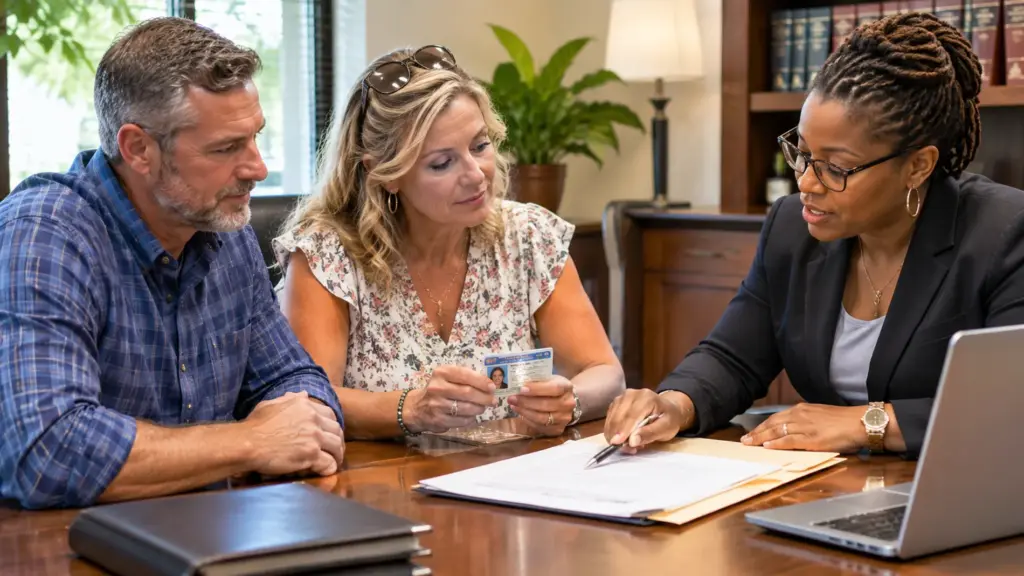
Buyers, sellers, and property owners can take practical steps even when a notary or closing professional conducts the formal verification.
- Use contact details obtained independently from a trusted source, not just an unexpected email or text.
- Confirm the seller’s ownership and authority to transfer the property.
- Question unusual requests for rapid closings, changes to wire instructions, or refusal to communicate directly.
- Ask whether the county provides alerts when an instrument is recorded against the property.
- Keep copies of relevant closing records and notify the title company promptly about unexplained discrepancies.
The Federal Trade Commission’s impersonation-scam guidance recommends verifying contacts using independently located phone numbers or websites rather than relying on the details supplied by an unexpected caller.
What Should Businesses and Notaries Review?
Real estate brokerages, settlement professionals, and businesses routinely collecting notarized documents should examine current signing procedures. Staff should know when identity checks occur, who is responsible for recognizing potential coercion, how a suspected deepfake is escalated, and how records are protected.
Businesses should also coordinate these procedures with privacy and information-security policies. A video recording containing identification details can be sensitive, and secure handling is important. Related governance issues appear in Anderson Law Group’s Alabama business-law guide and its discussion of digital records and fiduciary access.
What Happens if a Notary Suspects Fraud?
The notary should not complete a remote act when a statutory reason for mandatory refusal exists. Alabama also provides a complaint pathway for qualifying notary-law violations. According to the Secretary of State, certain transaction participants or Alabama attorneys may submit an affidavit to the commissioning probate judge or Secretary of State, who must refer it to the Alabama Law Enforcement Agency for investigation.
Victims of suspected parcel-owner impersonation may also report available evidence through the FBI’s Internet Crime Complaint Center. Reporting does not guarantee recovery or cancellation of a disputed transaction, and property owners may need individualized advice about title and court remedies.
Final Thoughts
Alabama’s remote notarization changes reflect a changing fraud environment. Act 2026-536 requires greater attention to the signer’s identity, understanding, voluntary participation, recording disclosure, secure communication, and possible AI-generated impersonation.
Remote notarization can remain a useful option when legally permitted, but convenience should never replace careful verification. Homeowners and businesses should review their document processes before conducting sensitive transactions.
This article is general educational information, not legal advice for a particular signing, deed, or dispute.